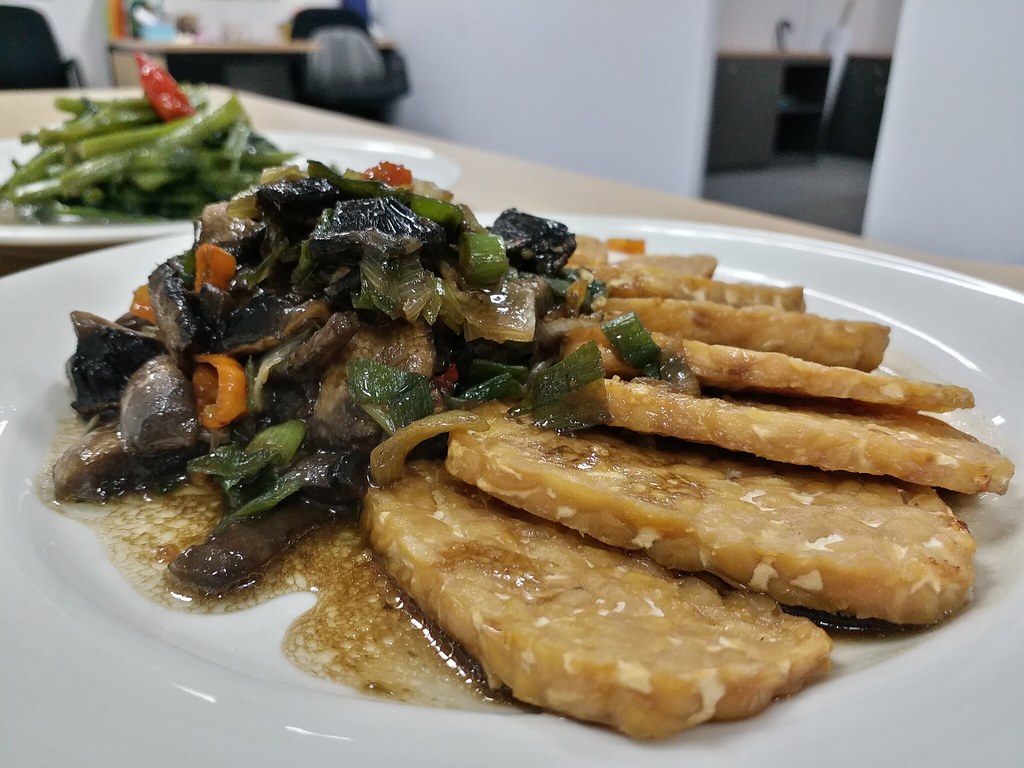
For years, tempeh was the thing in our fridge we bought with good intentions and threw out two weeks later. It tasted faintly bitter, a bit like cardboard, and it never soaked up a marinade the way tofu did. Then a friend from Yogyakarta came to dinner, picked up the packet, laughed, and said, "You're cooking it like an American." She was right. In Indonesia, tempeh is not a health food. It is a cheap, everyday staple, and Javanese cooks have about a hundred ways to make it irresistible.
A cake of beans held together by mould
Tempeh (spelled tempe in Indonesian) is made from soybeans that have been soaked, dehulled and boiled, then mixed with spores of a Rhizopus mould. The beans are packed into leaves or plastic and left somewhere warm, usually for a day or two. During that time, fine white threads of mould grow through and around every bean until they knit into a firm, sliceable cake.
If that sounds alarming, remember that cheese, soy sauce, bread and beer all rely on microbes too. The mould partly breaks down the beans, which makes tempeh easier to digest than plain soybeans and gives it its nutty, mushroomy flavour.
Tofu is soy milk curdled into a block. Tempeh is the whole bean, fermented. They are cousins, not twins.
Two hundred years on paper, much longer in kitchens
Tempeh is Javanese. The most widely quoted early written mention is in the Serat Centhini, a huge Javanese manuscript compiled in the early 1800s, which refers to tempe in passing as an ordinary food, so it was clearly common well before that. Traditionally the beans were wrapped in banana leaves or the broad leaves of the teak or waru tree, which hold warmth and let the cakes breathe. Some village makers still use them, and leaf-wrapped tempe has a slightly sweeter, grassier taste.
Here is a twist: Indonesia eats so much tempeh and tofu that it imports most of its soybeans, a large share of them from the United States. Some of the soy in a Javanese warung may well have grown in the American Midwest.
The family tree
- Tempe kedelai: the standard soybean tempeh you know.
- Tempe gembus: made from okara, the pulp left over from tofu making. Softer and very cheap.
- Tempe bongkrek: a coconut-based version that is now banned in Indonesia. When it went wrong, a bacterium could make a deadly toxin, and after repeated poisonings its sale was outlawed in 1988. It is a reminder that fermentation is a craft, not a gamble.
- Other beans: modern makers in Indonesia and abroad also make tempeh from chickpeas, black beans and other legumes.
How Java cooks it
Tempe goreng is the simplest: sliced, rubbed with garlic, coriander and salt, and fried until crisp. Tempe mendoan, from the Banyumas area of Central Java, is cut paper-thin, dipped in a herby batter and fried only briefly so it stays soft and floppy; locals say the name comes from a word for "half-cooked." Tempe orek is a sticky stir-fry of matchsticks with chilli and sweet soy sauce, a lunchbox classic. And tempe bacem, our favourite, is braised in coconut sugar and spices until the liquid disappears, then fried.

The trick our friend taught us
Steam or simmer supermarket tempeh for 10 minutes before you do anything else. It softens the cake, takes away most of the bitterness, and opens it up to soak in a marinade. Bacem does this naturally, which is why it is such a good first recipe.
Cook it: tempe bacem (sweet braised tempeh)
You need
- 14 oz (400 g) tempeh, cut into thick slices
- 5 shallots and 3 garlic cloves
- 1 tsp coriander seeds
- 1 in (2–3 cm) galangal, sliced
- 2 daun salam or bay leaves
- 3 oz (80 g) palm sugar or dark brown sugar
- 1 tbsp tamarind paste
- 1 tbsp kecap manis (optional)
- 1 tsp salt and 2 cups water
- Oil for frying
Method
- Pound or blend the shallots, garlic and coriander seeds into a rough paste.
- Put the paste in a wide pan with the galangal, leaves, sugar, tamarind, kecap manis, salt and water. Stir until the sugar dissolves.
- Add the tempeh in one layer. Simmer uncovered for 30–40 minutes, turning the slices now and then, until the liquid has almost gone and coats the tempeh in a sticky glaze.
- Shallow-fry or pan-sear the slices for a minute or two on each side until dark and caramelised. Watch closely; the sugar burns fast.
- Serve warm with rice, sambal and cucumber, or cold the next day, which many Javanese prefer.
Find it in New York
Elmhurst, Queens, is home to many of the city's Indonesian families, and Indonesian food stalls and bazaars pop up there from time to time. Asian grocers across Queens and Manhattan's Chinatown sell tempeh, and a few small New York makers produce fresh tempeh that is far better than the vacuum-packed kind. Fresh tempeh may have a few dark spots from the mould; that is normal.
Further reading: Tempeh · Serat Centhini · Bongkrek acid (Wikipedia overviews with their own citations).