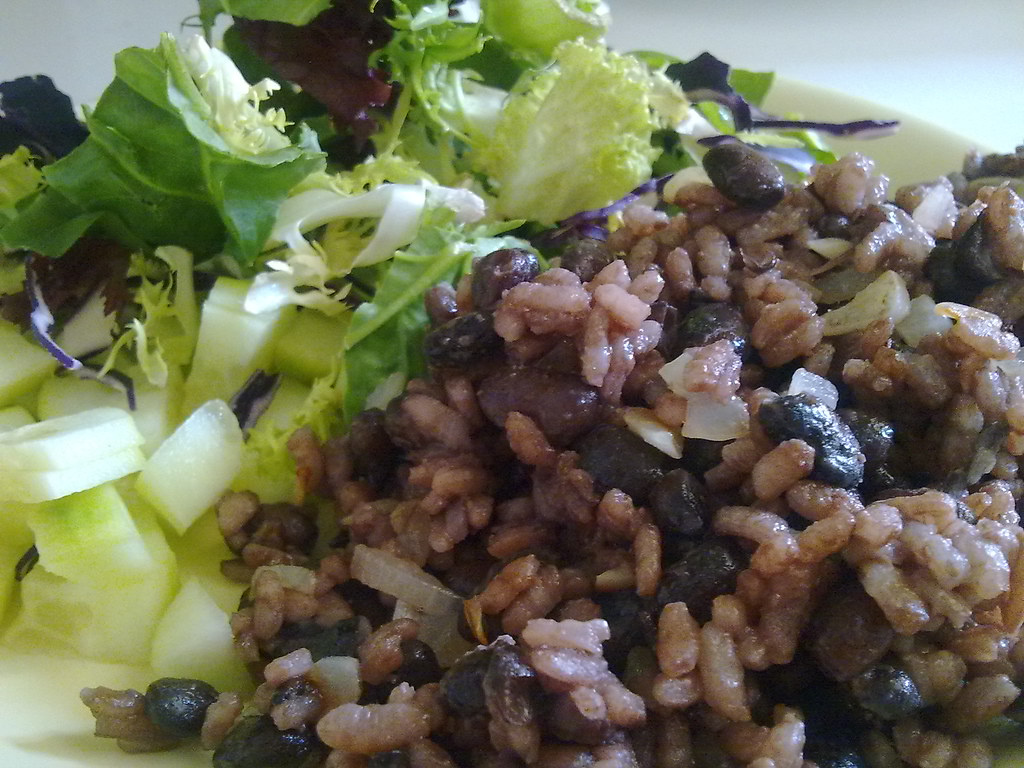
There are few faster ways to start an argument between a Costa Rican and a Nicaraguan than to ask who invented gallo pinto. We tried it once, by accident, at a birthday party in Corona, Queens. Twenty minutes later we had heard about red beans versus black beans, a famous brown sauce, and at least one claim involving somebody's great-grandmother. Nobody won. Everybody went back for seconds.
Rice and beans, fried together
Gallo pinto means "spotted rooster," supposedly because the dark beans scattered through white rice look like a speckled bird. The dish is simple: rice and beans that were cooked separately, often the day before, fried together in a little oil with onion, sweet pepper and garlic, then finished with fresh coriander. It is breakfast across both countries, eaten most days, by almost everyone.
It is also one of the easiest national dishes in the world to make vegan, because the base already is. The trouble starts with what comes alongside it.
Costa Rica versus Nicaragua
The differences are real, even if the feud is mostly affectionate.
- Costa Rica usually uses black beans, and many cooks add a splash of Salsa Lizano, a tangy, slightly sweet brown vegetable sauce made in Costa Rica since the 1920s. Costa Ricans tend to keep the mixture a little moist with some of the bean cooking liquid.
- Nicaragua usually uses small red beans, and the beans are often fried in the oil first until they colour, before the rice goes in. The result is drier and toastier.
Over the years the two countries have even staged giant-pot cook-offs to make the biggest gallo pinto on record, each trying to outdo the other. We find it hard to imagine a nicer kind of rivalry.
Day-old rice is not a shortcut here. It is the rule. Fresh rice turns to mush the moment it meets the beans.
Ordering it vegan
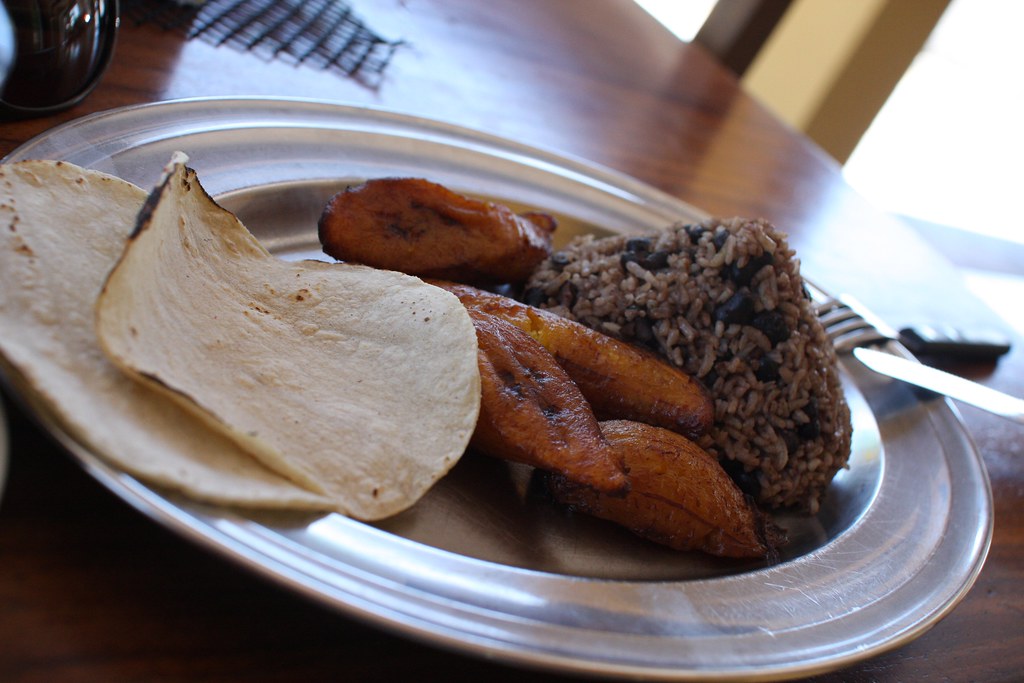
A traditional breakfast plate, a desayuno típico, puts gallo pinto next to fried or scrambled eggs, fried cheese, a spoon of natilla (a soured cream) and maybe some sausage. To make it vegan, ask for gallo pinto with plátanos maduros (sweet fried plantains), avocado and corn tortillas. In Spanish: "sin huevo, sin queso y sin natilla, por favor."
One more question is worth asking in small, old-fashioned places: some cooks fry with lard. "¿Lo cocinan con aceite o con manteca?" (Do you cook it with oil or lard?) Most restaurants today use vegetable oil, but it is good to know.
Why it works
Rice and beans together are a classic pairing for good reason. The two complement each other's protein building blocks, and with the fibre from beans and the energy from rice, it is a breakfast that genuinely lasts until lunch. Nobody in San José eats it for nutritional reasons, of course. They eat it because it is cheap, quick and tastes like home.
Cook it: Costa Rican-style gallo pinto
You need
- 2 cups cooked white rice, at least a day old
- 1½ cups cooked black beans
- ½ cup of the bean cooking liquid (or water)
- 2 tbsp oil
- 1 small onion, finely chopped
- ½ red bell pepper, finely chopped
- 2 garlic cloves, minced
- 2–3 tbsp Salsa Lizano (check the label), or a vegan Worcestershire-style sauce
- 3 tbsp chopped fresh coriander, salt and pepper
Method
- Heat the oil in a wide frying pan. Cook the onion and pepper for 5 minutes until soft, then add the garlic for 30 seconds.
- Add the beans and their liquid and simmer 3–4 minutes, until the liquid reduces and turns dark.
- Add the rice and sauce. Fold gently with a spatula, rather than stirring, so the grains stay whole and the beans stain the rice.
- Cook 5 minutes until hot and only slightly moist. Season, then fold in the coriander.
- Serve with maduros, avocado, tortillas and hot sauce.
Many Worcestershire sauces contain anchovies. Look for one labelled vegan.
Find it in New York
New York's Costa Rican and Nicaraguan communities are small, but Central American cafés in Corona and Jackson Heights in Queens, and across the Bronx, serve their own versions of rice-and-beans breakfasts, from Salvadoran casamiento to Honduran plates. Latin grocers in the same neighbourhoods often stock Salsa Lizano.
Further reading: Gallo pinto · Lizano sauce · Casado (Wikipedia overviews with their own citations).