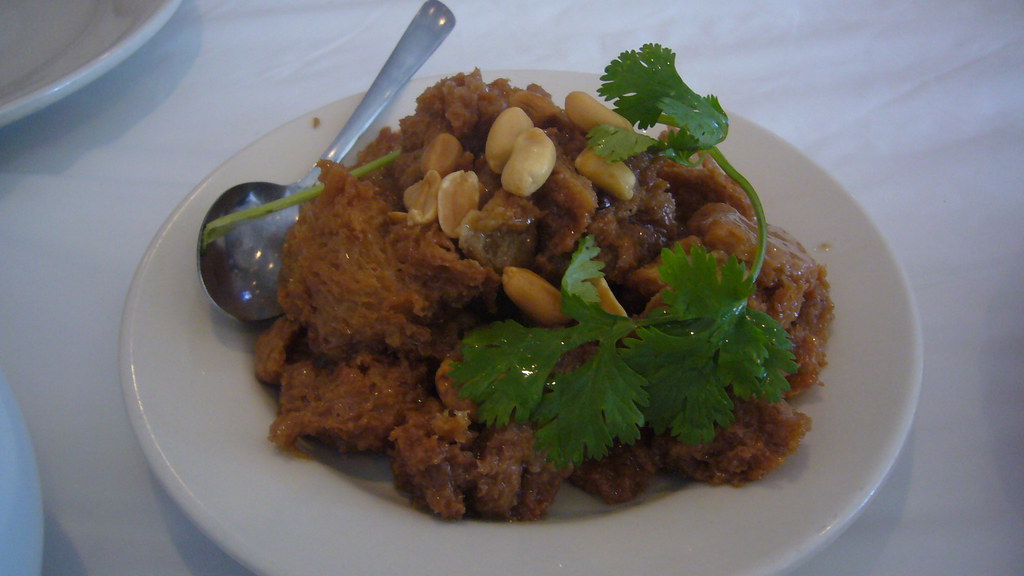
In a lot of American cafés, seitan is sold as if somebody invented it in the 1970s, next to the granola and carob brownies. Walk into a Buddhist vegetarian restaurant in Manhattan's Chinatown, though, and you will find braised gluten, fried gluten puffs, gluten "duck" and gluten "char siu" that come out of a tradition many centuries old. The word seitan is young. The food is ancient.
"The muscle of the flour"
Wheat gluten is what is left when you knead a dough and then wash it under water until all the starch rinses away. You end up with a stretchy, rubbery mass that is mostly protein. In Chinese it is called mian jin, roughly "the sinew of flour," which describes it perfectly.
Chinese cooks have known this trick for a very long time. The 11th-century scholar Shen Kuo is often credited with one of the earliest clear written descriptions of washing dough to get gluten. Accounts of Song-dynasty cities such as Kaifeng and Hangzhou describe vegetarian eateries serving imitation meats, many of them almost certainly made from gluten and tofu. Much of this was driven by Buddhism. Monks and devout lay Buddhists avoided meat, and hosts who wanted to honour them, or recreate familiar banquet dishes without killing anything, became remarkably good at mimicry.
Kao fu: the spongy one
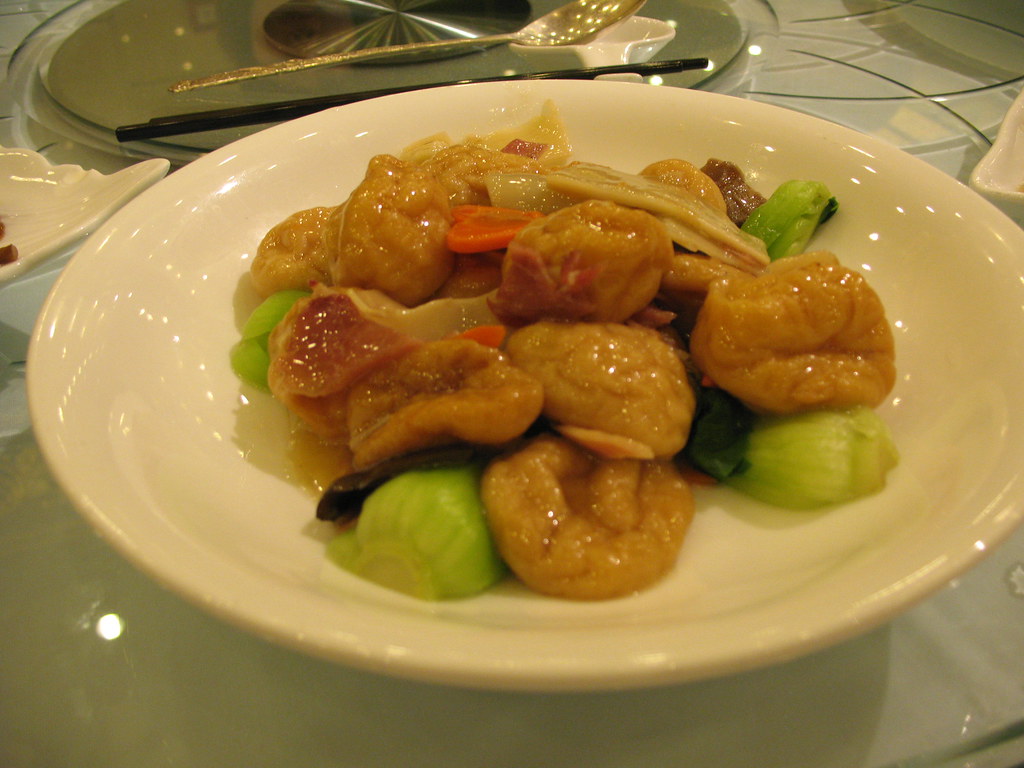
Our favourite gluten dish is kao fu, which is completely different in texture. Wheat gluten is left to rise, a bit like bread dough, then steamed into a light, spongy block full of holes. Torn into chunks and braised, it soaks up sauce like a bath sponge.
In Shanghai, the classic is si xi kao fu, "four joys kao fu." The kao fu is braised with wood ear mushrooms, shiitake, dried lily flowers and peanuts in soy sauce and a little sugar, then served cool. It turns up at Lunar New Year tables all over the region, and families argue cheerfully about whose is best.
Mian jin is chewy, kao fu is spongy, Japanese fu is light, and Western seitan is dense. Same protein, four completely different foods.
How it got the name "seitan"
Gluten travelled to Japan with Buddhism, where it became fu. Kyoto is famous for namafu, fresh, chewy fu often flavoured with millet or mugwort, and it is a staple of temple cooking. The word "seitan" came much later. It is usually credited to the Japanese macrobiotic movement around George Ohsawa in the early 1960s, and the macrobiotic diet brought it to the US and Europe. From there it went into health-food stores and eventually into vegan "wings" and deli slices.
Two warnings
First, the obvious one: seitan is pure gluten. If you have coeliac disease or a wheat allergy, it is completely off the menu.
Second, not every mock meat is vegan. Some commercial imitation meats contain egg white or milk proteins as binders, and some Chinese vegetarian dishes use oyster sauce out of habit. In Buddhist restaurants this is rare, but if it matters to you, ask, or read the packet.
Cook it: simmered seitan, the easy way
You need
- 1½ cups (180 g) vital wheat gluten
- ¼ cup chickpea flour
- 2 tbsp nutritional yeast
- 1 tsp garlic powder
- 1 cup cold vegetable stock
- 2 tbsp soy sauce and 1 tbsp tomato paste
- Broth: 8 cups vegetable stock, ¼ cup soy sauce, 3 slices ginger, 2 star anise, 1 strip kombu
Method
- Mix the gluten, chickpea flour, yeast and garlic powder. Whisk the stock, soy sauce and tomato paste, and pour in.
- Stir, then knead for 2–3 minutes until springy. Rest 10 minutes, then cut into 4 pieces and stretch each slightly.
- Put the broth ingredients in a large pot and add the seitan while the broth is still cold.
- Bring up slowly to the gentlest simmer, with just a few bubbles. Never let it boil hard, or the seitan turns spongy and brain-like.
- Simmer partly covered for 45–60 minutes, turning once. Cool in the broth.
- Slice and pan-fry, braise in a sauce, or add to stir-fries. It keeps a week in the fridge, in its broth.
Old-school method: knead 3 cups bread flour with about 1¼ cups water, rest an hour, then squeeze and rinse it in a bowl of water until the water runs nearly clear. What's left is raw gluten.
Find it in New York
Manhattan's Chinatown and downtown Flushing, Queens, both have Buddhist vegetarian restaurants and bakeries, and Chinese supermarkets sell canned braised gluten, frozen kao fu and bags of fried gluten puffs. Japanese grocers stock dried fu. For homemade seitan, vital wheat gluten is easy to find in health-food stores.
Further reading: Wheat gluten (food) · Kaofu · Buddhist cuisine (Wikipedia overviews with their own citations).