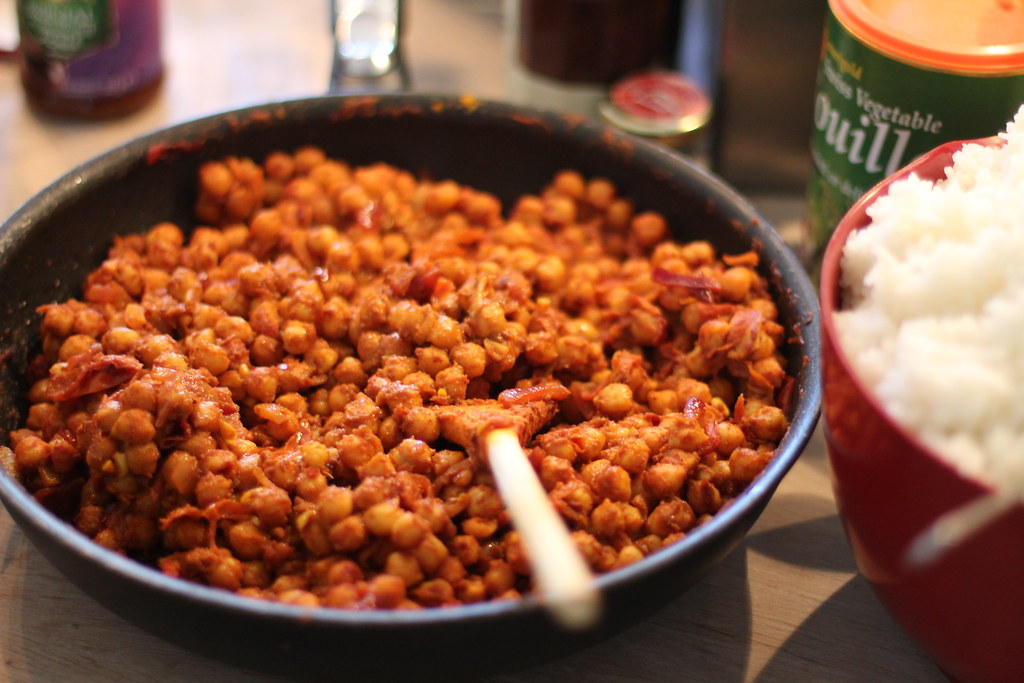
Our first attempt at chana masala looked like chickpeas in tomato soup. It tasted fine. It was also pale, thin and completely forgettable. The version we had eaten the week before, from a steel tray in a Richmond Hill sweet shop, had been nearly brown, thick enough to stand a spoon in, and sour in a way we could not place. Something was missing, and it was not one ingredient. It was about four small habits, and time.
This is the story of those habits.
Chana, chole and a dish that crossed a border
In Punjab, the farming region split between India and Pakistan, this dish is usually called chole. "Chana masala" is the name that travelled. It is made with kabuli chana, the large cream-coloured chickpeas most Americans know, rather than kala chana, the small, dark, nutty desi chickpeas that go into other dishes.
Its fame in Delhi is tied to 1947. After Partition, hundreds of thousands of Punjabi refugees settled in the city, and many made a living selling the food they knew. Chole bhature, spicy chickpeas with a puffed fried bread, became one of Delhi's defining breakfasts. Today it is as Delhi as anything.
Habit one: put a tea bag in the pot
That deep colour we could not get? Many Punjabi cooks boil their chickpeas with a few black tea bags, or loose tea tied in muslin. The tannins stain the chickpeas a dark brown and add a faint, earthy bitterness that makes the sauce taste older and richer. Some households use dried amla (Indian gooseberry) for the same reason. You take the bags out before cooking the masala. It feels like a cheat. It is a tradition.
Habit two: brown the onions until you are bored
Most recipes say "fry the onions until golden, about five minutes." For this dish that is not enough. The onions should go past golden to a deep, even brown, which takes closer to fifteen or twenty minutes over medium heat. Stir, wait, stir. When they are dark and soft, add ginger and garlic, then tomatoes, and keep cooking until the oil starts to separate from the paste and pool at the edges. Indian cooks call this stage bhunao. Skip it and you get our tomato soup.
The difference between average and great chana masala is twenty extra minutes of standing at the stove.
Habit three: go sour
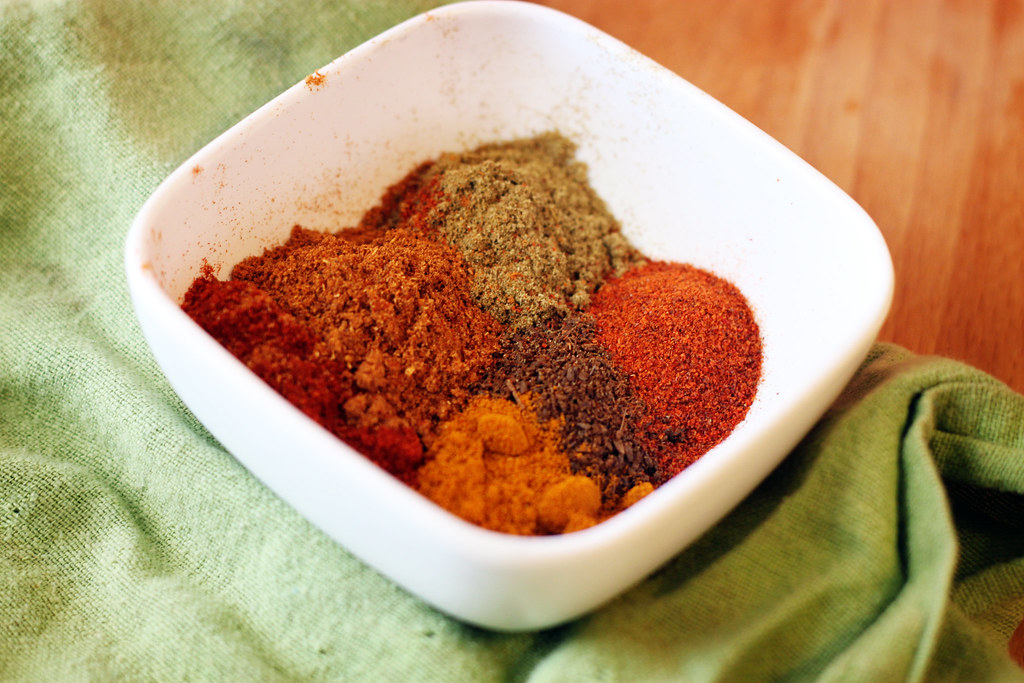
The flavour we could not name was sourness, and not from lemon. Punjabi chole often uses anardana, dried pomegranate seeds ground to a sticky powder, and amchur, powdered dried green mango. Together they give a sharp, fruity tang that cuts through the richness. Most South Asian grocers sell both, along with ready-made "chole masala" or "chana masala" blends that already include them.
Habit four: mash a few
Once the chickpeas go into the masala, press a ladleful against the side of the pot. The crushed chickpeas thicken the gravy so it clings, rather than sitting in a puddle.
Is it vegan? Usually, with two questions
Chana masala itself is normally made with oil, so it is often vegan as served. Two things to check: some restaurants finish it with butter or a swirl of cream, and the bread matters. Bhature dough very often contains yogurt, and naan frequently includes milk or yogurt too. Plain roti or rice is the safer partner. Ask for "no ghee, no cream, no butter."
The same honesty applies to langar, the free meal served at Sikh gurdwaras. The Golden Temple in Amritsar feeds an enormous number of people every day, and the food is always vegetarian. It is not always vegan, though, because dal is often finished with butter and the rice pudding is made with milk.
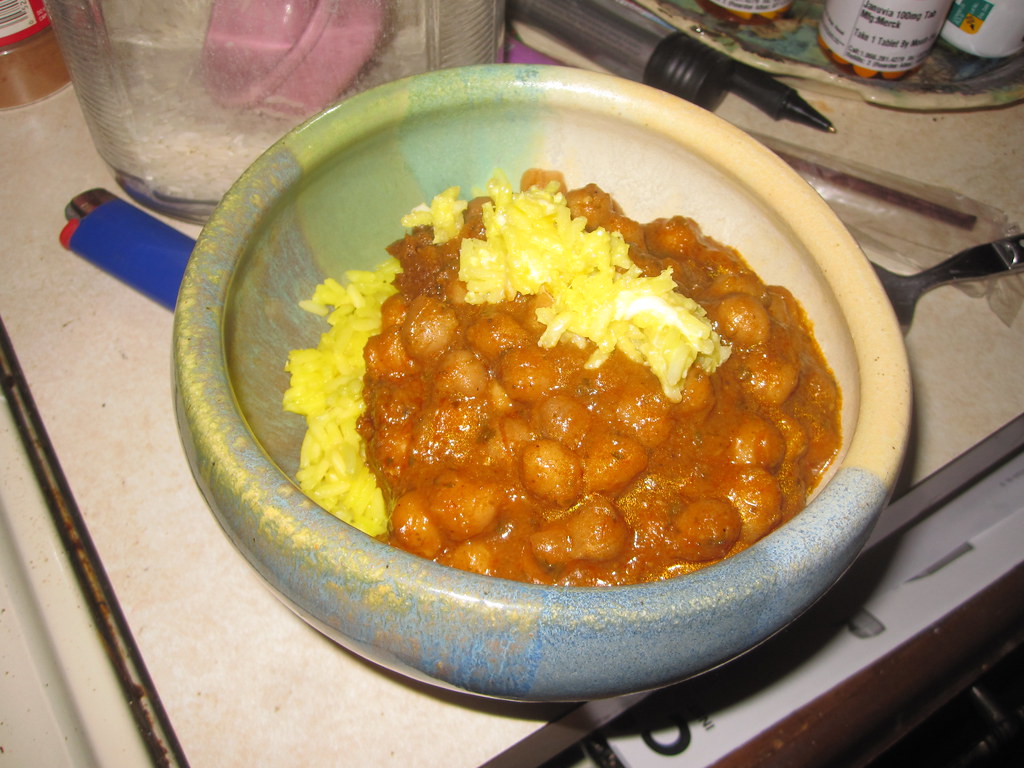
Cook it: dark, tangy chana masala
You need
- 1½ cups dried chickpeas, soaked overnight
- 2 black tea bags
- 3 tbsp oil
- 1 tsp cumin seeds and 1 bay leaf
- 2 large onions, finely chopped
- 1 tbsp each grated ginger and garlic
- 1–2 green chillies, slit
- 3 ripe tomatoes, puréed
- 1 tbsp ground coriander, ½ tsp turmeric
- 1–2 tsp Kashmiri chilli powder
- 2 tsp chana masala blend
- 1 tsp each amchur and ground anardana
- Salt, garam masala, coriander leaves, lemon
Method
- Drain the chickpeas. Cook them in fresh water with the tea bags and a teaspoon of salt until completely tender: about 35–40 minutes in a pressure cooker, or 1½–2 hours simmering. Remove the tea bags and keep 1½ cups of the cooking liquid.
- Heat the oil, add cumin seeds and bay leaf, and let them sizzle for 20 seconds.
- Add the onions and cook over medium heat, stirring, for 15–20 minutes until deep brown.
- Add ginger, garlic and chilli for 1 minute, then the tomato purée. Cook until thick and the oil separates, about 10 minutes.
- Stir in all the ground spices except garam masala and cook 1 minute.
- Add the chickpeas and their liquid. Mash a ladleful against the pot. Simmer 20 minutes until thick.
- Finish with garam masala, salt, chopped coriander and a squeeze of lemon. It is even better the next day.
Find it in New York
Richmond Hill in Queens is home to one of the largest Punjabi Sikh communities in the US, and its sweet shops and dhabas serve chole most mornings. Jackson Heights, around 74th Street, is the place to stock up on anardana, amchur, Kashmiri chilli and every chickpea known to science. Ask for no butter or cream, and pair it with roti or rice.
Further reading: Chana masala · Chole bhature · Langar (Wikipedia overviews with their own citations).