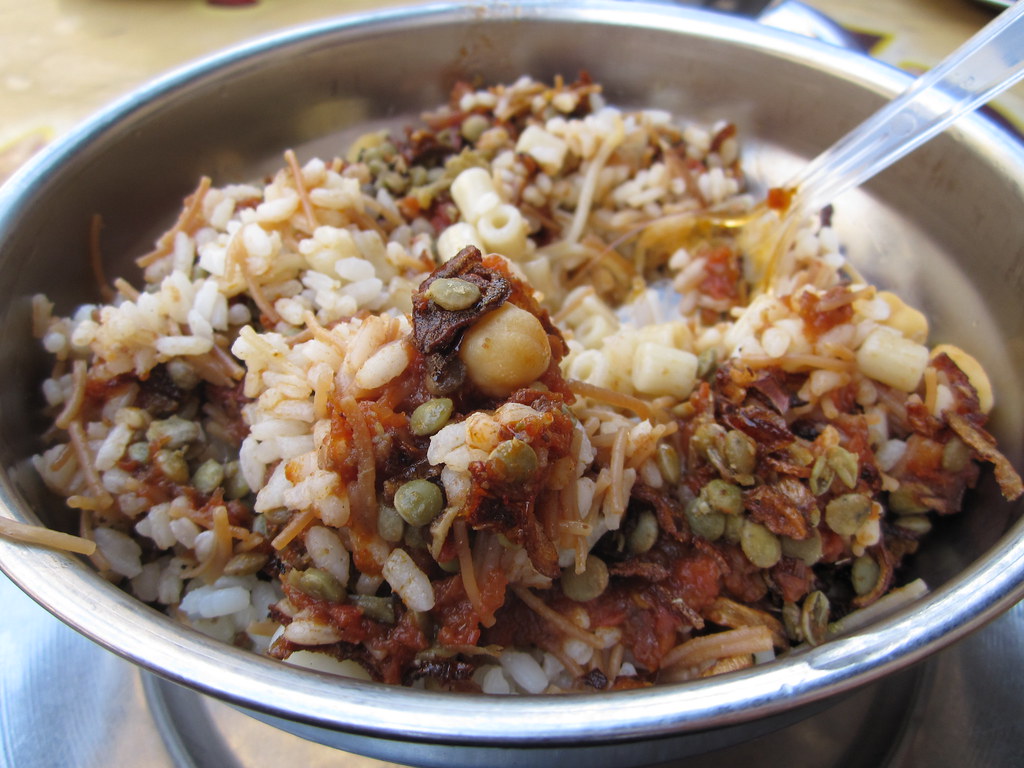
If you described koshari to a nutritionist, they would probably faint. Rice. Lentils. Macaroni. Sometimes vermicelli too. Chickpeas on top, a vinegary tomato sauce poured over everything, and a heap of onions fried until they shatter. It is a bowl of carbohydrates topped with more carbohydrates. It is also one of the most satisfying meals we have ever eaten, it costs very little in Cairo, and the classic version contains no animal products at all.
The sound of a koshari shop
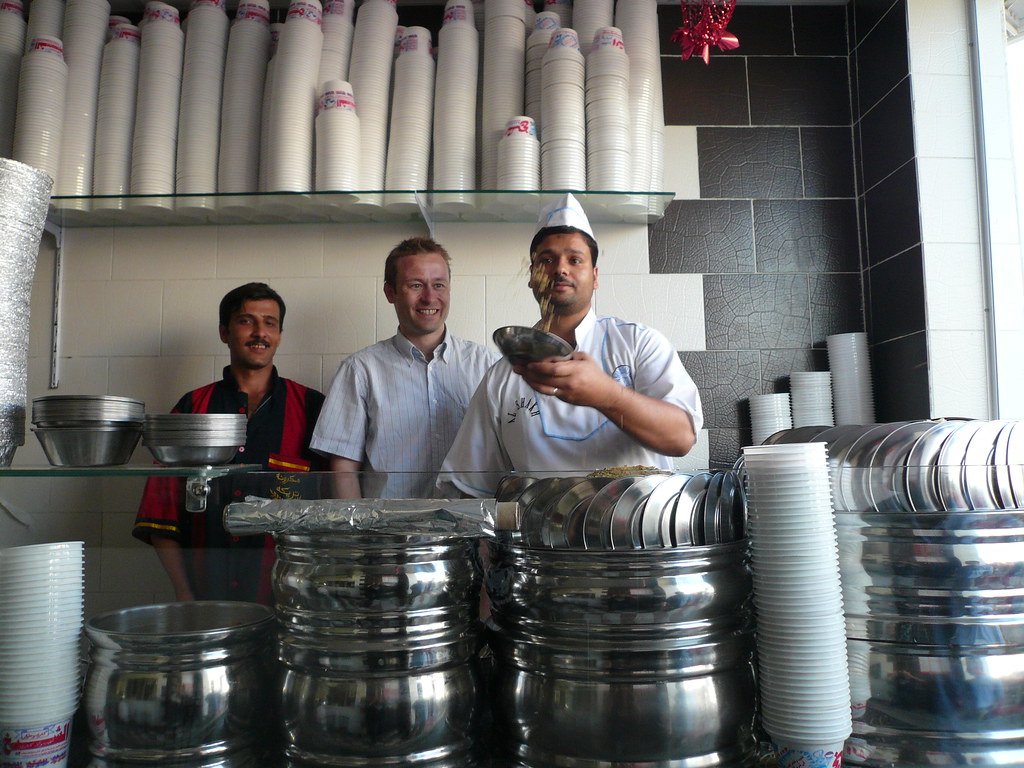
Walk into a busy koshari place in Cairo and the first thing you notice is the noise. Behind the counter, the server builds each bowl from big metal pots, rice and lentils first, then pasta, then chickpeas, then a ladle of sauce and a fistful of onions. Between scoops, the metal spoon clatters against the bowl in a quick rhythm, part habit and part showmanship. Shops such as Abou Tarek in downtown Cairo have become famous for it, but every neighbourhood has its own favourite.
A dish built by history
Koshari is usually traced to the 19th century, and its name is often linked to khichdi, the Indian dish of rice and lentils. The common story is that the idea arrived with the British Empire, when soldiers and traders moved between India and Egypt, and Egyptians made it their own. Pasta and tomato came later, reflecting the Italian influence felt across the Mediterranean. Nobody can prove every step, but the result is pure Cairo: thrifty, filling and wildly popular across every social class.
It is also beloved during Coptic Christian fasting periods. Egypt's Copts, like Ethiopia's Orthodox Christians, fast from animal products for long stretches of the year, and a dish that is already vegan fits perfectly.
Koshari proves that "cheap and filling" and "delicious" were never opposites.
The layers, explained
- Rice and brown lentils, cooked together, often with toasted vermicelli for colour and crunch.
- Small macaroni, boiled separately.
- Chickpeas, scattered on top.
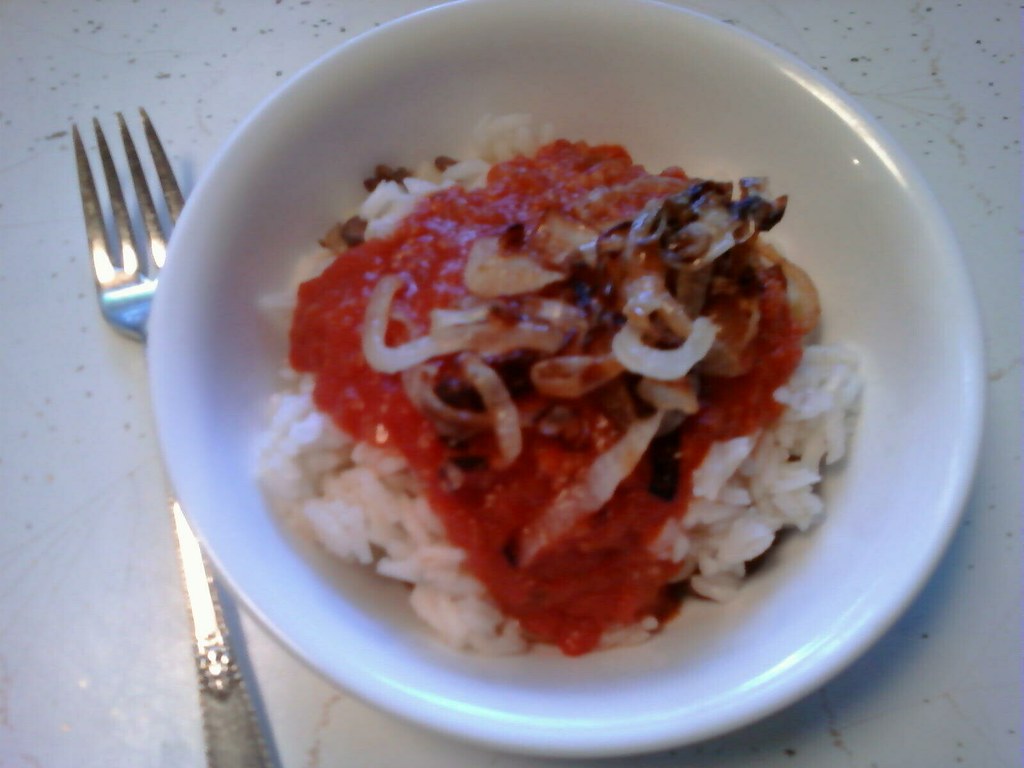
- Salsa: a thin, sharp tomato sauce with garlic, cumin and a good splash of vinegar.
- Dakka: a punchy garlic, vinegar and cumin dressing, poured to taste.
- Shatta: chilli sauce for anyone who wants heat.
- Crispy onions: sliced thin and fried slowly until deep brown. The oil left behind flavours the rice.
The vinegar is the secret. Without it koshari is heavy and flat. With it, every mouthful wakes you up.
Is koshari always vegan?
The standard shop version is. Onions are fried in vegetable oil and nothing else contains animal products. A few home cooks use ghee or meat stock for the rice, and some modern restaurants add extras, so if you are strict, ask how the rice is cooked. In our experience the answer in Egyptian places is almost always "just oil."
Cook it: koshari for a crowd
You need
- 3 onions, thinly sliced, and 1 cup oil
- 1 cup brown lentils, rinsed
- 1 cup short- or medium-grain rice
- ½ cup vermicelli, broken up
- 2 cups small macaroni
- 1 can chickpeas, drained
- Sauce: 4 garlic cloves, 28 oz (800 g) crushed tomatoes, 1 tsp cumin, chilli flakes, 3 tbsp white vinegar, salt, pinch of sugar
- Dakka: 4 garlic cloves, ½ cup vinegar, ¼ cup water, ½ tsp cumin, salt, juice of ½ lemon
Method
- Fry the onions in the oil over medium heat, stirring, for 20–25 minutes until deep brown. Drain on paper towels; they crisp as they cool. Keep the oil.
- Simmer the lentils in water for 15 minutes until just tender, then drain.
- In 2 tbsp of the onion oil, toast the vermicelli until golden. Add the rice, lentils, salt and 2½ cups water. Cover and cook gently for 18–20 minutes.
- Boil the macaroni in salted water and toss with a spoon of onion oil.
- For the sauce, fry the garlic in 2 tbsp onion oil, add tomatoes, cumin, chilli, salt and sugar, and simmer 15 minutes. Stir in the vinegar.
- Stir together the dakka ingredients.
- Build each bowl: rice and lentils, macaroni, chickpeas, sauce, a big handful of onions, then dakka to taste.
Find it in New York
Steinway Street in Astoria, Queens, is often called Little Egypt, with Egyptian cafés, groceries and restaurants along several blocks. That is the most reliable place to find koshari in the city. Egyptian and Middle Eastern grocers there also sell ready-fried crispy onions if you are short on time.
Further reading: Koshary · Khichdi · Coptic Orthodox Church (Wikipedia overviews with their own citations).